


Easy up tents Above & Beyond
How much does a standard easy up tent weigh?
Why the weight of your tent matters
When choosing an easy up tent, you probably first look at size and price, but the weight is just as important. It determines how easily you can transport the tent, how quickly you can set it up, and how stable the structure remains in windy conditions.
Our professional easy up tents are designed to offer the right balance between portability and durability.
What do we mean by a standard easy up tent?
In most cases, this refers to a 3 x 3 metre tent, the most popular size for markets, open days, garden parties and sports events. It serves as a useful reference when comparing the weight of different models.
Larger sizes, such as 3 x 4.5 metres or 3 x 6 metres, will naturally be heavier due to the larger frame and canopy surface.

Weight of lightweight versus professional frames
The weight of a folding tent says a lot about the stability and robustness of the frame. Our AluLite 3 x 3 m is the lighter range within our collection, yet it still weighs 35.1 kg – a clear difference compared to entry-level models that often weigh less than 20 kg.
For more intensive use, there is the AluForce range. The AluForce 3 x 3 m with polyester canopy also weighs 35.1 kg, while the AluForce 3 x 3 m with PVC canopy reaches 37 kg. Thanks to the stronger frame, reinforcements and professional finish, these models offer maximum stability and a longer lifespan.
The weight of the canopy and sidewalls
The total weight of your folding tent is not determined by the frame alone. The type of canopy also has a clear impact. Our AluForce 3 × 3 m with a polyester canopy weighs 35.1 kg, while the same tent with a PVC canopy reaches 37 kg. PVC is heavier but offers extra durability and a longer lifespan for intensive use.
With the lighter AluLite 3 × 3 m, the total weight remains 35.1 kg, thanks to the polyester canopy and the slightly lighter frame. This makes the tent easier to move, while still being significantly sturdier than standard lightweight models.
When you add sidewalls, the total weight increases again. Extra panels improve stability in windy conditions, but are slightly less convenient if you frequently set up and take down the tent. Keep this in mind when making your choice.

Accessories that influence the total weight
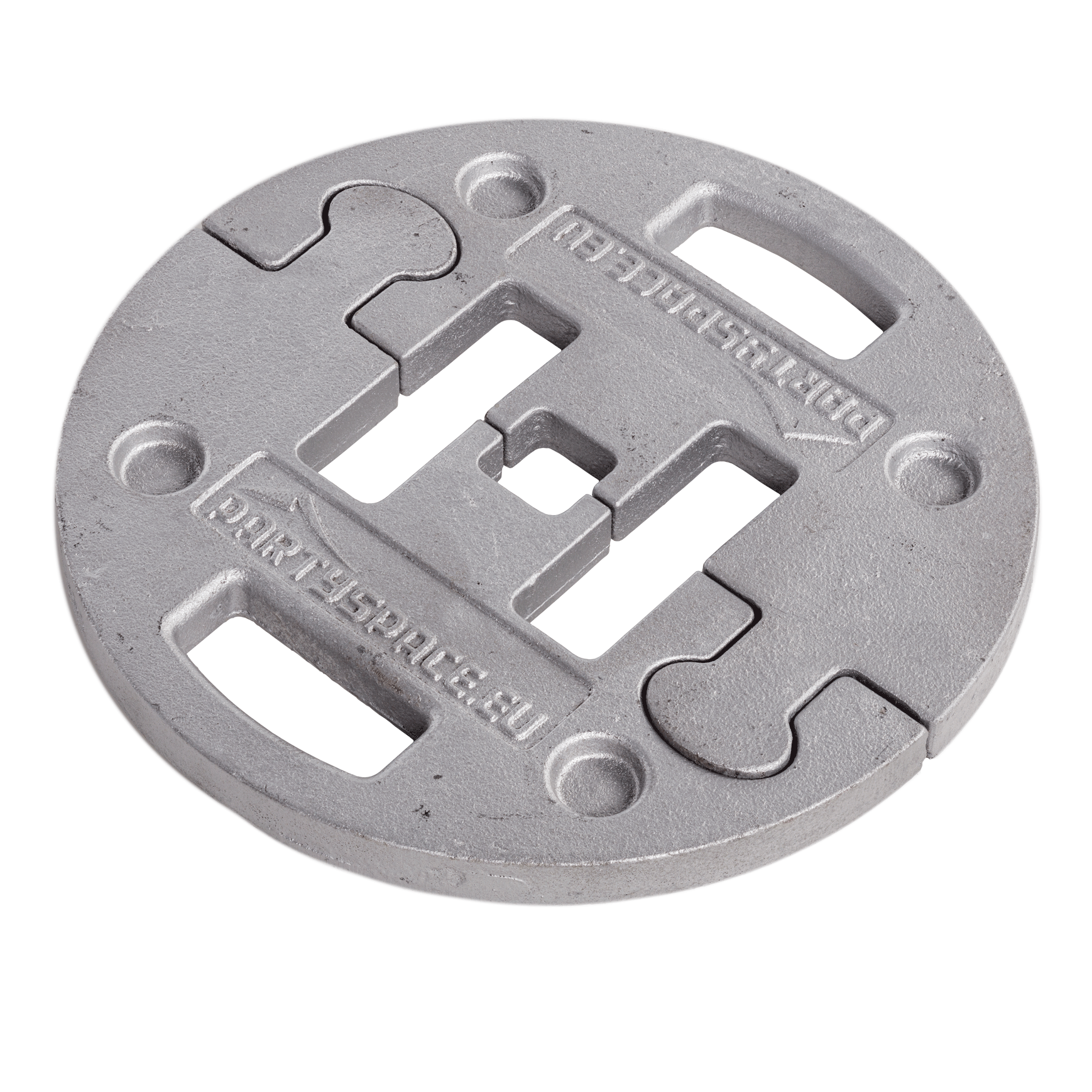
For a safe setup, additional accessories are usually required: concrete weights, anchoring systems, rain gutters and possibly a flooring system.
With weights and storm straps, you deliberately increase the overall weight so the tent remains stable, especially on hard surfaces or in exposed locations.
Carrying comfort: lifting alone or setting up together?
A lighter model is easier to carry on your own, but requires more attention to anchoring in windy conditions. A heavier, professional frame is typically intended to be moved and set up by two people.
Consider in advance who will be using the tent: a team at events or one person managing everything alone. This helps you choose the right weight.



The right balance between mobility and stability
There is no such thing as the ideal weight, but there is an ideal balance. For intensive professional use, a heavier, more stable easy up tent is usually the best choice.
If you only use the tent a few times a year in sheltered conditions, a lighter model such as our AluLite may be sufficient — as long as you always ensure proper anchoring.

Conclusion: how much does your ideal easy up tent weigh?
The exact weight of a folding tent depends on the frame and the type of canopy. Our AluLite 3 × 3 m and AluForce 3 × 3 m (polyester) both weigh 35.1 kg, while the AluForce 3 × 3 m (PVC) comes in at 37 kg. A heavier canopy, additional reinforcements and accessories can further increase the total weight.
Keep in mind that a high-quality transport bag also adds some extra weight. Our durable PVC carry bag protects your tent during transport and storage, while making it easier to handle for regular use.
Want to make sure you choose the right model for your needs? Contact Above & Beyond for personalised advice based on usage frequency, location and required accessories.


